Skip to content



Most roof leaks do not start in the middle of a roof.
They start at transitions, joints, penetrations, and roof edges.
One of the most overlooked yet critical components in any flat roof system is the parapet wall cap flashing. Although it appears to be a simple finishing element, it plays a crucial role in protecting the parapet wall, waterproofing layers, insulation, and façade from long-term moisture damage.
When parapet cap flashing is poorly designed, incorrectly installed, or omitted entirely, water can penetrate the building envelope and cause expensive repairs years after project completion.
For architects, developers, contractors, and building owners, understanding parapet wall cap flashing is essential for creating durable, watertight, and low-maintenance roof edge systems.
This guide explains how parapet wall cap flashing works, which materials perform best, common design mistakes, cost considerations, maintenance requirements, and why prefabricated parapet systems are becoming the preferred solution in modern construction.
Parapet Wall Cap Flashing – Quick Answer
Many users searching for parapet wall cap flashing want a direct explanation before diving into technical details.
| Component | Primary Function |
| Parapet Wall Cap Flashing | Protects the top of the parapet from water infiltration |
| Coping Cap | Covers and protects parapet walls |
| Drip Edge | Directs water away from the façade |
| Waterproofing Integration | Connects roof membrane to roof edge protection |
| Expansion Joints | Accommodate thermal movement |
| Overhang | Prevents water tracking onto wall surfaces |
A properly designed parapet wall cap flashing system acts as the first line of defense against moisture penetration and helps preserve the performance of the entire roof edge waterproofing assembly.
What Is Parapet Wall Cap Flashing?
A parapet wall cap flashing is the protective covering installed on top of a parapet wall. Its primary function is to prevent rainwater from entering the parapet structure while directing water safely away from the building envelope.
Without a properly designed flashing cap, the top of the parapet becomes vulnerable to water penetration. Rainwater can enter through cracks, joints, porous materials, or poorly sealed transitions and gradually migrate into the roof assembly.
Cap flashing acts as the first line of defense against weather exposure. It protects the most exposed horizontal surface of the parapet and helps maintain the integrity of the entire roof edge waterproofing system.
While it may appear to be a minor architectural detail, it is actually one of the most important waterproofing components at the roof perimeter.
Why Parapet Wall Cap Flashing Is Critical for Roof Waterproofing
The roof edge is exposed to some of the harshest environmental conditions on a building.
Wind-driven rain, UV radiation, temperature fluctuations, snow accumulation, freeze-thaw cycles, and thermal expansion all place enormous stress on parapet details.
A properly designed parapet wall cap flashing serves several functions simultaneously.
It prevents direct water infiltration into the parapet wall. It protects waterproofing membranes from excessive weather exposure. It directs rainwater away from insulation layers and façades. Most importantly, it helps prevent moisture from entering concealed parts of the building envelope where damage often remains undetected until major repairs become necessary.
The cost of a quality flashing system is usually insignificant when compared with the cost of repairing moisture damage inside a building.
Why Roof Edge Failures Usually Begin at the Top of the Parapet
Many building envelope failures originate at the highest and most exposed point of the roof edge.
This may seem surprising because the parapet cap is often viewed as a finishing element rather than a critical waterproofing component.
However, water naturally attacks horizontal surfaces first. The top of the parapet receives direct exposure to rainfall, snow, ice, UV radiation, and thermal cycling throughout the year.
If the cap flashing allows water penetration, moisture can migrate downward into insulation, waterproofing membranes, structural components, and façade systems. The resulting damage often remains hidden for years before becoming visible.
For this reason, experienced building-envelope consultants frequently identify parapet coping details as one of the highest-risk areas of a flat roof.
How Water Enters a Parapet Without Proper Cap Flashing
Many building failures begin with surprisingly small defects at the roof edge.
Water rarely needs a large opening. Tiny gaps at joints, poorly sealed corners, or inadequate flashing overlaps are often enough to allow moisture intrusion.
Water Penetration Through the Top Surface
Concrete, masonry, and many façade materials absorb moisture over time.
Without protective capping, rainwater can enter directly through the top of the parapet. Repeated wetting accelerates deterioration and increases the likelihood of cracking.
Wind-Driven Rain at Roof Edges
Parapets are particularly vulnerable because wind pressure concentrates around building edges.
Water can be forced into small openings that would otherwise remain harmless under normal rainfall conditions.
Freeze-Thaw Damage
When absorbed moisture freezes, it expands.
Over multiple seasons, this expansion can cause cracking, spalling, joint failure, and progressive deterioration of the parapet structure.
A properly installed parapet wall flashing cap dramatically reduces these risks.
Common Warning Signs of Parapet Flashing Failure
Many roof edge problems become visible long before major structural damage occurs.
Recognizing these warning signs early can significantly reduce repair costs.
| Warning Sign | Possible Cause |
| Water stains below parapet | Failed flashing joints |
| Efflorescence on masonry | Moisture penetration |
| Peeling paint | Water infiltration |
| Rust stains | Corroding metal flashing |
| Cracked coping joints | Thermal movement |
| Interior ceiling leaks | Roof-edge waterproofing failure |
| Mold growth | Persistent moisture intrusion |
Routine inspection of these symptoms can help building owners identify problems before extensive repairs become necessary.
Common Types of Parapet Wall Capping Materials
Selecting the right parapet wall capping material has a significant impact on durability, maintenance requirements, aesthetics, and long-term performance.
Different projects require different solutions depending on climate, budget, architectural intent, and building type.
Material Comparison for Parapet Wall Capping
| Material | Durability | Maintenance | Weight | Typical Application |
| Aluminium | High | Low | Light | Commercial and residential |
| Stainless Steel | Very High | Low | Medium | Premium projects |
| Galvanized Steel | High | Medium | Medium | Commercial buildings |
| GRP | High | Low | Light | Coastal environments |
| PVC | Moderate | Medium | Light | Budget projects |
| Lead | Very High | Low | Heavy | Heritage projects |
| Terra Cotta | High | Medium | Heavy | Traditional architecture |
The most appropriate solution depends on performance requirements, project budget, maintenance expectations, and environmental conditions.
Aluminium Parapet Wall Capping
Aluminium capping for parapet walls is one of the most widely used solutions in modern construction.
Its popularity stems from its combination of durability, corrosion resistance, low weight, and architectural flexibility.
Architects often choose aluminium parapet wall capping because it can be manufactured in a wide range of colors and finishes while maintaining excellent weather resistance.
For many commercial and residential projects, aluminium provides the optimal balance between cost and long-term performance.
Steel and Metal Capping for Parapet Walls
Metal capping for parapet walls is commonly used on commercial buildings where durability and structural strength are priorities.
Galvanized steel and stainless steel systems provide excellent resistance to impact and weather exposure.
However, careful detailing is required to manage thermal expansion and prevent corrosion at joints and fasteners.
When properly designed, metal parapet wall caps can provide decades of reliable service.
GRP Parapet Wall Capping
Glass-reinforced plastic (GRP) capping systems are increasingly used where lightweight construction and corrosion resistance are important.
GRP solutions can be manufactured in complex shapes and require relatively little maintenance.
Their durability makes them particularly attractive in aggressive coastal environments where metal corrosion may become a concern.
PVC and Plastic Parapet Wall Capping
PVC parapet wall capping systems are generally selected for budget-conscious projects.
While they offer lower initial costs, they may have shorter service lives compared with premium metal systems, particularly in environments with significant UV exposure.
For long-term commercial projects, higher-performance materials are often preferred.
Typical Lifespan of Different Parapet Capping Materials
One of the most common questions architects and building owners ask is how long different parapet capping materials will last.
| Material | Typical Service Life* |
| Aluminium | 25–50 years |
| Stainless Steel | 40–60+ years |
| Galvanized Steel | 20–40 years |
| GRP | 25–40 years |
| PVC | 15–25 years |
| Lead | 50+ years |
| Terra Cotta | 40+ years |
*Actual service life depends on climate, maintenance, exposure conditions, and installation quality.
Long-term durability should always be considered alongside initial cost.
Waterproofing Upstands and Parapet Cap Flashing
Parapet cap flashing does not work in isolation.
It must function as part of a complete parapet waterproofing system that includes membranes, insulation, drainage components, and roof-edge detailing.
Waterproofing membranes are typically extended vertically above the roof surface to create a watertight upstand. These upstands commonly extend 150 mm or more above the finished roof level, depending on project requirements.
The cap flashing must integrate seamlessly with these waterproofing layers to prevent water from bypassing the protective system.
Poor coordination between flashing and membrane design remains one of the most common causes of roof-edge leakage.
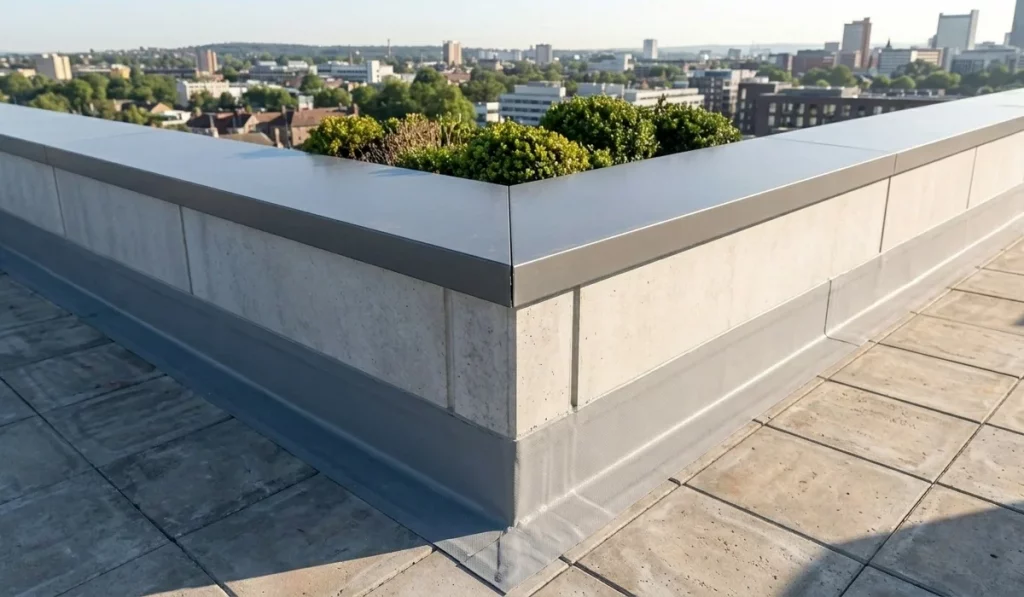
Essential Components of a Parapet Wall Capping Detail
The success of a parapet wall capping detail depends on more than material selection alone.
Proper geometry and detailing are equally important.
Overhang Dimensions
The flashing cap should extend beyond the parapet face to ensure water drips clear of the façade.
Insufficient overhang often results in staining, algae growth, and moisture damage on external wall surfaces.
Drip Edge Design
A drip edge prevents water from tracking back underneath the flashing.
This seemingly minor feature is one of the most important elements in roof edge waterproofing systems.
Expansion Joints
All metal materials expand and contract with temperature changes.
Well-designed expansion joints prevent buckling, distortion, and joint failure over time.
Waterproofing Integration
The cap flashing must work as part of a complete roof waterproofing assembly.
Poor coordination between flashing and membrane systems is one of the leading causes of roof edge leakage.
What Should a Parapet Wall Capping Detail Drawing Include?
Architects and contractors rely on detailed drawings to coordinate roof-edge construction.
A complete parapet wall capping detail should typically illustrate:
| Detail Element | Purpose |
| Roof structure | Supports entire assembly |
| Insulation | Thermal performance |
| Waterproofing membrane | Water protection |
| Upstand detail | Waterproofing continuity |
| Parapet wall | Structural support |
| Coping cap | Weather protection |
| Drip edge | Water management |
| Expansion joint | Thermal movement control |
Accurate detailing significantly reduces construction errors and improves long-term waterproofing performance.
How to Choose the Right Parapet Wall Caps
Selecting parapet wall caps involves balancing durability, aesthetics, maintenance requirements, project budget, and environmental exposure.
Commercial buildings often prioritize aluminium, stainless steel, or prefabricated systems due to their long service life and low maintenance requirements. Residential projects may place greater emphasis on architectural appearance and cost efficiency.
The best parapet wall caps are those that support waterproofing performance while minimizing lifecycle costs.
Common Parapet Wall Flashing Failures and Their Engineering Causes
Many roof edge failures are entirely preventable.
Unfortunately, flashing details are often simplified during design, value-engineered during construction, or modified on-site to accommodate unforeseen conditions. These seemingly minor changes can significantly reduce long-term waterproofing performance.
Most parapet flashing failures do not occur because the material itself is defective. Instead, they occur because the system was not designed, coordinated, or installed correctly.
| Failure Type | Common Cause | Potential Consequence |
| Open joints | Poor installation | Water infiltration |
| Missing drip edge | Incorrect detailing | Façade staining |
| Inadequate overlap | Improper fabrication | Leakage |
| Thermal movement damage | Missing expansion joints | Buckling and cracking |
| Corrosion | Material incompatibility | Structural deterioration |
| Membrane separation | Poor waterproofing integration | Roof leaks |
| Fastener failure | Incorrect attachment design | Flashing displacement |
A successful parapet wall cap flashing system must be viewed as part of the entire building-envelope strategy rather than a standalone metal component.
Why Thermal Movement Causes Many Flashing Failures
One of the most overlooked engineering considerations in parapet wall cap flashing design is thermal movement.
Metal expands when heated and contracts when cooled. Roof-edge components experience significant temperature fluctuations throughout the year because they are exposed directly to sunlight, wind, rain, and ambient temperature changes.
If thermal movement is not properly accommodated, several problems can occur:
- Buckled flashing sections
- Distorted joints
- Open seams
- Fastener pull-out
- Waterproofing failures
For long parapet runs, expansion joints are often among the most important elements in the entire flashing system.
Architects and engineers should always coordinate flashing lengths, fixing methods, and movement joints during design rather than attempting to solve these issues during installation.
Why Waterproofing Failures Often Begin at Flashing Interfaces
Waterproofing membranes and flashing systems must function together as a single coordinated assembly.
Unfortunately, these components are frequently designed by different parties and installed by different trades. Every interface between materials creates a potential risk point.
Common problems include:
- Poor membrane termination
- Inadequate overlap dimensions
- Improper sequencing during installation
- Incompatible materials
- Unsealed transitions
Because water naturally seeks the path of least resistance, even a small discontinuity at the flashing interface can eventually lead to significant moisture intrusion.
For this reason, successful roof-edge waterproofing depends heavily on coordination between designers, roofing contractors, waterproofing specialists, and metal fabricators.
What Does Parapet Wall Cap Flashing Cost?
One of the most common questions from developers and contractors concerns the cost of parapet wall coping caps.
The answer depends on several variables, including material selection, project complexity, fabrication requirements, installation access, and building size.
While exact project costs vary significantly, the following comparison illustrates the relative cost ranges of common solutions.
| Material | Relative Initial Cost | Typical Lifecycle Value |
| PVC | Low | Moderate |
| Aluminium | Moderate | High |
| Galvanized Steel | Moderate | High |
| Stainless Steel | High | Very High |
| GRP | Moderate | High |
| Lead | High | Very High |
| Terra Cotta | High | High |
The lowest initial cost option is not always the most economical solution over the life of the building.
When evaluating parapet wall coping cap cost, decision-makers should consider maintenance requirements, service life, replacement costs, and the financial consequences of potential water damage.
Why Lifecycle Cost Matters More Than Initial Cost
Many roof-edge failures occur because projects prioritize short-term savings over long-term performance.
The cost difference between a high-quality parapet wall cap flashing system and a budget alternative is often relatively small compared with the total project budget.
However, the cost of repairing water damage can be substantial.
Potential consequences include:
- Waterproofing replacement
- Insulation replacement
- Façade repairs
- Interior finishes restoration
- Mold remediation
- Tenant disruption
- Business interruption
For this reason, many experienced building-envelope consultants recommend evaluating roof-edge systems based on lifecycle performance rather than installation cost alone.
Maintenance and Inspection of Parapet Wall Cap Flashing
Even the best flashing system benefits from periodic inspection.
Regular maintenance helps identify small issues before they become major building-envelope failures.
Inspection programs typically focus on:
- Joint condition
- Sealant deterioration
- Fastener integrity
- Corrosion
- Mechanical damage
- Membrane interfaces
- Drainage performance
Many roof-edge problems can be corrected quickly and inexpensively if discovered early.
A proactive maintenance strategy often extends the service life of parapet wall caps significantly.
How Often Should Parapet Flashing Be Inspected?
Inspection frequency depends on climate, building use, and exposure conditions.
As a general principle, roof-edge systems should be reviewed:
- After major storms
- Following significant roof work
- During routine building-envelope inspections
- As part of preventative maintenance programs
Buildings located in coastal, industrial, or high-wind environments may require more frequent inspection.
Regular observation helps prevent minor defects from developing into major waterproofing failures.
Real Construction Example 1 – Residential Flat Roof
A modern residential flat roof incorporates several layers that must work together at the roof edge.
Typical project characteristics may include:
- Roof insulation build-up
- Waterproofing membrane
- Aluminium parapet wall cap flashing
- Concealed drainage system
- Architectural façade integration
In this type of project, the flashing cap not only protects the parapet but also contributes to the visual appearance of the building.
Careful detailing is essential to maintain both aesthetics and waterproofing performance.
Real Construction Example 2 – Commercial Office Building
Commercial buildings often contain long parapet runs that are particularly sensitive to thermal movement.
In one typical scenario, a parapet may extend hundreds of meters around the perimeter of a building.
Without properly designed expansion joints, thermal movement can cause distortion, joint separation, and leakage.
For large commercial projects, flashing design must therefore address structural movement, waterproofing integration, and long-term maintenance requirements simultaneously.
Real Construction Example 3 – Coastal Building Environment
Buildings located near the coast face unique challenges.
Salt exposure accelerates corrosion and places additional demands on roof-edge materials.
For these projects, designers frequently select aluminium, stainless steel, or GRP parapet wall capping systems because of their superior resistance to aggressive environmental conditions.
Material selection becomes especially important when the building is expected to perform reliably for several decades.
Engineering Considerations for Long-Term Roof Edge Performance
The most successful roof-edge systems are designed with long-term performance in mind.
Architects and engineers should evaluate:
- Wind exposure
- Thermal movement
- Waterproofing integration
- Drainage performance
- Maintenance accessibility
- Material compatibility
- Structural support requirements
By considering these factors during design, project teams can significantly reduce the likelihood of future building-envelope problems.
Good roof-edge design is rarely the result of a single component. It is the result of multiple systems working together correctly.
Why Traditional Parapet Flashing Systems Often Create Construction Challenges
Traditional parapet construction requires coordination among multiple trades.
The concrete contractor constructs the parapet. Waterproofing specialists install membranes. Metal fabricators produce flashing components. Roofing contractors complete final integration.
Each interface creates potential risk.
Small dimensional variations can lead to installation difficulties, compromised waterproofing, and unexpected site modifications.
The result is often increased labor, longer schedules, and greater potential for construction defects.
Traditional Roof Edges vs Prefabricated Roof Edge Systems
The construction industry is increasingly moving toward prefabricated roof-edge systems that reduce complexity and improve consistency.
| Factor | Traditional Site-Built Parapet | Prefabricated Parapet System |
| Construction Speed | Slower | Faster |
| Site Labor | Higher | Lower |
| Dimensional Accuracy | Variable | Consistent |
| Waterproofing Coordination | More Complex | Simplified |
| Weather Dependency | Significant | Reduced |
| Quality Control | Variable | Repeatable |
| Risk of Site Errors | Higher | Lower |
| Installation Predictability | Moderate | High |
This shift reflects a broader industry trend toward industrialized construction and higher-quality building-envelope solutions.
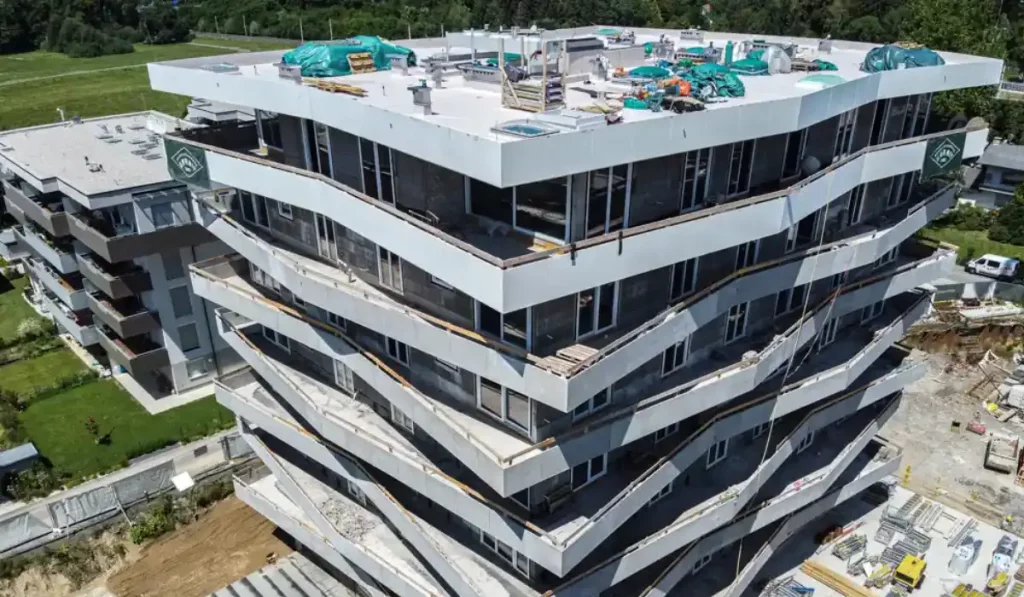
Modern Prefabricated Parapet Systems Simplify Roof Edge Waterproofing
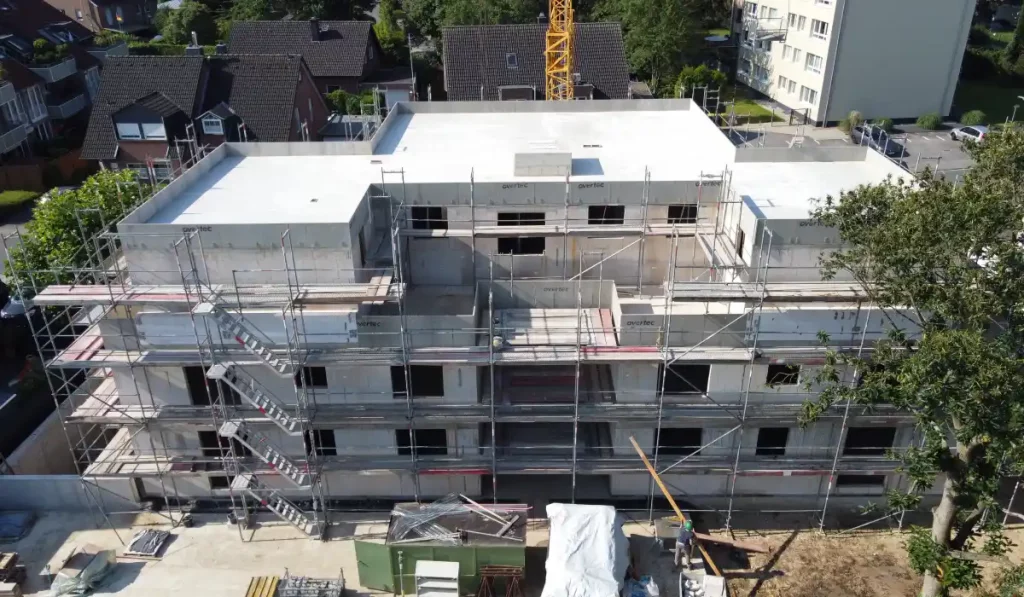
Rather than assembling multiple components on site, prefabricated parapets integrate critical roof-edge requirements into a coordinated system.
This approach reduces construction tolerances, simplifies waterproofing integration, and improves quality control.
Most importantly, it transforms one of the highest-risk building-envelope details into a predictable and repeatable solution.
For project teams seeking greater certainty in roof-edge construction, prefabrication offers significant advantages.
Related Solution – Overtec Prefabricated Parapet Systems
Overtec specializes in prefabricated parapet systems engineered to simplify roof-edge construction while improving durability and waterproofing performance.
Unlike traditional site-built parapets, Overtec systems are manufactured with precise geometry that supports consistent flashing installation and reliable waterproofing integration.
Because critical dimensions are controlled during production, contractors benefit from reduced installation complexity and improved construction predictability.
Because prefabricated parapet systems can be engineered with slimmer and more efficient profiles, projects may also benefit from improved usable terrace or balcony space compared with conventional site-built parapet solutions. In residential developments where every square meter contributes to property value, even small gains in usable outdoor space can provide meaningful long-term benefits for both developers and occupants.
Additional advantages include:
- Up to 67% lower CO₂ emissions compared with traditional cast-in-place concrete solutions
- Faster installation
- Reduced thermal bridging
- Improved quality consistency
- Less weather dependency
- Reduced site labor requirements
- Lower coordination effort between trades
- Fewer roof-edge detailing errors
- Better waterproofing integration
- Greater lifecycle performance
As labor shortages continue to affect construction projects across Europe, reducing complex on-site work has become increasingly valuable.
For architects, developers, and contractors seeking greater certainty in roof-edge construction, prefabricated parapet systems provide a practical and future-oriented alternative.
Contact Overtec to learn how prefabricated parapet systems can improve roof waterproofing, reduce construction risk, and accelerate project delivery.
Related Topics
Parapet Wall Flashing
Understanding flashing interfaces helps improve long-term waterproofing performance.
Flat Roof Parapet
Parapets and flashing systems must be coordinated as part of a complete roof-edge assembly.
Roof Edge Waterproofing
Successful waterproofing depends on the interaction between membranes, drainage systems, and flashing details.
Parapet Wall Construction
Construction methods influence flashing installation, dimensional accuracy, and maintenance requirements.
Conclusion
Parapet wall cap flashing may appear to be a small detail, but it plays a major role in protecting the entire building envelope.
Without effective capping, parapets become vulnerable to moisture intrusion, freeze-thaw damage, façade deterioration, corrosion, and long-term waterproofing failures.
By selecting appropriate materials, implementing proven flashing details, accommodating thermal movement, and considering modern prefabricated solutions, project teams can significantly improve durability and reduce maintenance costs.
The most successful roof-edge designs recognize a simple reality: water management begins at the top of the parapet.
Frequently Asked Questions (FAQ)
Parapet wall cap flashing is the protective covering installed on top of a parapet wall to prevent water penetration and direct rainwater away from the building envelope.
Coping generally refers to the protective top covering of a parapet wall, while flashing refers to waterproofing components that direct water away from critical building joints.
Aluminium is one of the most popular options because it combines durability, corrosion resistance, low maintenance, and architectural flexibility. However, the best material depends on project requirements and environmental conditions.
Failures commonly result from inadequate overlaps, poor drainage design, missing drip edges, thermal movement issues, corrosion, and improper integration with waterproofing membranes.
Service life depends on material selection, installation quality, maintenance, and environmental exposure. Premium systems can remain functional for several decades.
Costs vary depending on material, fabrication complexity, project size, and installation conditions. Lifecycle value is often more important than initial cost alone.
Expansion joints allow flashing systems to accommodate thermal movement and help prevent buckling, cracking, and joint failure.
Regular inspections should be performed as part of preventative maintenance programs and after significant weather events.
A drip edge helps direct water away from the façade and prevents moisture from tracking underneath the flashing.
Prefabricated systems often provide greater dimensional accuracy, faster installation, improved waterproofing integration, and reduced construction risk compared with traditional site-built parapets.