Skip to content



The height of a parapet wall may seem like a simple design decision, but in reality it affects safety, waterproofing performance, building regulations, maintenance requirements, and even long-term construction costs.
For architects, developers, contractors, and building owners, understanding the correct parapet wall height is critical. A parapet that is too low can create fall-protection concerns and complicate waterproofing details. A parapet that is too high can increase structural loads, material consumption, and construction costs.
Modern construction projects increasingly recognize that the roof edge is one of the most technically demanding areas of the building envelope. The correct parapet wall height influences not only safety, but also drainage performance, energy efficiency, maintenance access, and long-term durability.
In this guide, we explain standard parapet wall heights, fall-protection considerations, waterproofing requirements, common design mistakes, and how modern prefabricated parapet systems help create safer and more reliable roof-edge construction.
Typical Height of a Parapet Wall – Quick Answer
Many people searching for the height of a parapet wall want a direct answer before diving into technical details.
While there is no single universal height that applies to every building, the following table provides common industry ranges used in modern construction.
| Application | Typical Height |
| Decorative Parapet | 300–900 mm |
| Residential Flat Roof | 900–1200 mm (3–4 ft) |
| Commercial Buildings | 1000–1200 mm |
| Accessible Roof Terrace | 1100–1200 mm |
| OSHA-equivalent Fall Protection Threshold | Approx. 1070 mm (42 in) |
| High Privacy or Screening Wall | 1500 mm+ |
These values are general guidance only. Local building regulations, safety standards, and project-specific requirements should always be verified before construction begins.
What Is the Height of a Parapet Wall and Why Does It Matter?
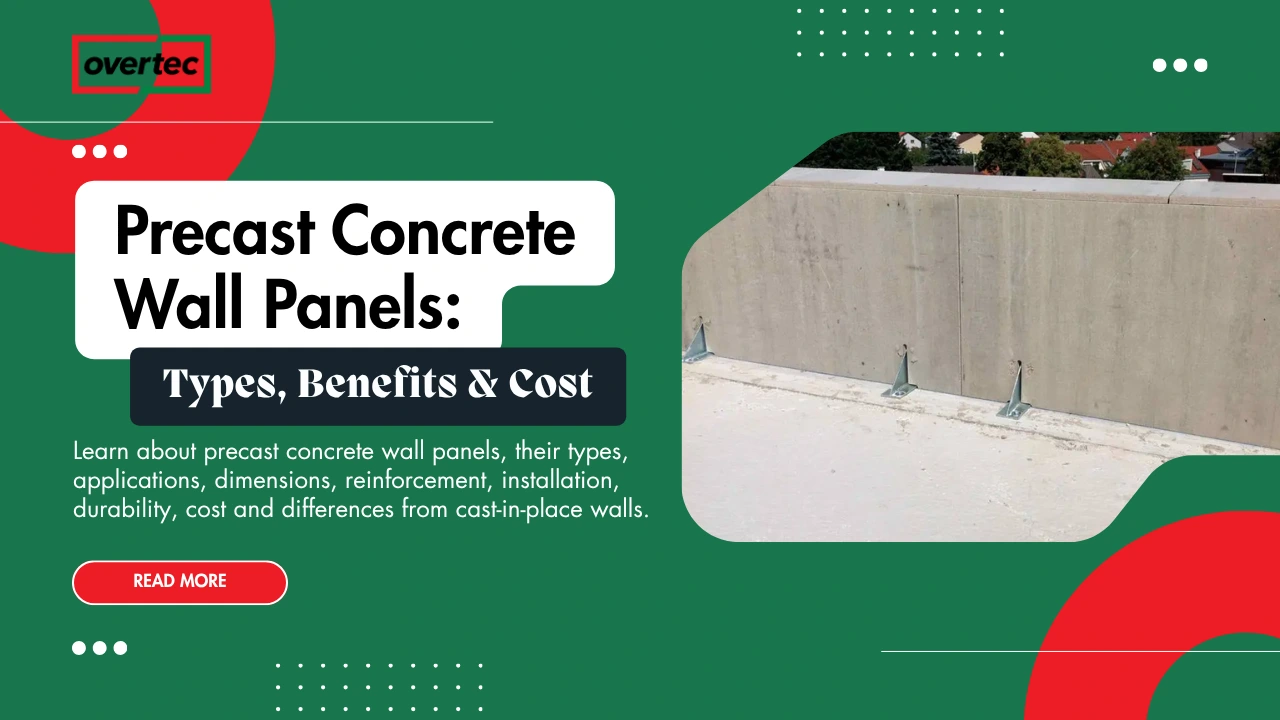
A parapet wall is the vertical extension of an exterior wall above the roof line, terrace edge, balcony edge, or flat roof perimeter.
Historically, parapets were used for defensive purposes and architectural expression. In modern construction, they perform a much broader range of functions. They provide fall protection, protect waterproofing systems, conceal rooftop equipment, improve building aesthetics, and help shield roof edges from wind exposure.
The height of a parapet wall directly affects how effectively these functions can be performed. Even relatively small dimensional differences can influence waterproofing performance, maintenance safety, drainage reliability, and construction complexity.
For this reason, parapet height should never be treated as a purely architectural decision. It is a key part of building-envelope design.
Standard Parapet Wall Height in Modern Construction
There is no universal standard parapet wall height that applies to every project.
The required height depends on several factors, including:
- Whether the roof is accessible
- Building use
- Local regulations
- Fall-protection requirements
- Waterproofing design
- Architectural intent
In practice, parapet walls typically fall within the following ranges:
| Application | Typical Height |
| Waterproofing upstand only | 150–300 mm |
| Non-accessible flat roof | 300–600 mm |
| Roof equipment screening | 600–900 mm |
| Accessible roof terrace | 900–1200 mm |
| Balcony parapet | 1000–1200 mm |
| Fall-protection parapet | 1100 mm+ |
A parapet intended only to support waterproofing details may be relatively low. However, once a roof becomes accessible to occupants or maintenance personnel, significantly greater heights are typically required.
Understanding this distinction early in the design process helps avoid costly redesigns later.
Is There a Maximum Height for a Parapet Wall?
Unlike minimum parapet heights, maximum parapet wall heights are usually governed by structural design, wind loading, architectural intent, and local building regulations rather than a universal code requirement.
As parapet height increases, engineers must account for additional wind pressure, structural loads, material consumption, and attachment requirements. For this reason, very tall parapets often require enhanced structural design and coordination with the overall building system.
In practice, parapets above 1500 mm are commonly used for privacy screening, rooftop equipment concealment, and architectural expression. However, each project should be evaluated individually.
Common Parapet Wall Heights and Their Typical Uses
One of the most common questions asked by architects and property owners is how parapet wall heights relate to real-world applications.
The following table provides a useful reference.
| Height | Typical Use |
| 300 mm | Decorative parapet |
| 600 mm | Low roof-edge screening |
| 900 mm | Basic residential roof edge |
| 1070 mm | OSHA-equivalent fall-protection threshold |
| 1100–1200 mm | Accessible roof terraces |
| 1500 mm+ | Privacy screening and wind protection |
This table targets many practical design situations and demonstrates why parapet height should always be linked to the intended use of the roof rather than selected arbitrarily.
Parapet Wall Height in Feet, Millimeters and Centimeters
Different projects and jurisdictions use different measurement systems. For international projects, it is often helpful to compare common parapet heights across multiple units.
| Feet | Millimeters (mm) | Centimeters (cm) |
| 3 ft | 914 mm | 91.4 cm |
| 3.5 ft | 1067 mm | 106.7 cm |
| 4 ft | 1219 mm | 121.9 cm |
| 5 ft | 1524 mm | 152.4 cm |
This conversion table helps satisfy search intent for users looking specifically for parapet wall height in feet, parapet wall height in mm, or parapet wall height in cm.
Minimum Height of a Parapet Wall for Waterproofing Compliance
Before discussing fall protection, it is important to understand waterproofing requirements.
Flat roof systems rely heavily on vertical upstands at roof edges. These upstands help prevent water ingress during heavy rain, snow accumulation, blocked drains, or temporary ponding situations.
The parapet wall often provides the vertical surface required to achieve these waterproofing details.
A parapet that is too low may make it difficult or impossible to install waterproofing systems correctly. This can result in leakage risks, warranty disputes, and expensive remediation work.
For architects and contractors, ensuring adequate height for waterproofing should be considered one of the primary functions of a parapet wall.
Waterproofing Upstand Height and Parapets
One of the most overlooked aspects of parapet design is waterproofing upstand height.
Waterproofing membranes are typically extended vertically above the finished roof level to create a watertight barrier. In many flat roof applications, upstands of approximately 150 mm or more above the finished roof surface are commonly required.
The parapet wall must therefore be high enough to accommodate:
- Insulation layers
- Waterproofing membranes
- Roof finishes
- Drainage details
- Coping systems
- Future maintenance tolerances
If parapet height is underestimated during design, contractors often struggle to achieve compliant waterproofing details.
This is one of the most common causes of roof-edge leakage problems.
Why Waterproofing Requirements Influence Parapet Height
Many people assume parapet height is determined primarily by safety requirements.
In reality, waterproofing often establishes the minimum starting point for parapet design.
Even when a roof is inaccessible and does not require fall protection, the parapet must still provide sufficient height for waterproofing upstands, drainage details, insulation build-ups, and coping installation.
As roof assemblies become thicker due to higher insulation requirements, the need for properly planned parapet dimensions becomes increasingly important.
For this reason, roof-edge design should always be coordinated with the waterproofing strategy from the earliest planning stages.
Parapet Wall Height for Fall Protection Requirements
When roofs become accessible, safety becomes the dominant factor in determining parapet height.
A parapet wall can function as a protective barrier that helps prevent falls from height. However, the effectiveness of the parapet depends on its dimensions, structural design, and compliance with applicable safety standards.
The greater the risk associated with a fall, the greater the importance of providing adequate edge protection.
Architects should therefore evaluate roof access requirements, maintenance activities, and occupant use early in the design process.
Minimum Parapet Wall Height for Occupied Roof Areas
Occupied roof terraces, accessible rooftops, amenity decks, and frequently serviced technical roofs typically require significantly greater parapet heights than non-accessible roofs.
Depending on project requirements, parapets commonly fall within the following range:
- 1000 mm
- 1100 mm
- 1200 mm
These dimensions help improve roof edge safety while supporting compliance with building regulations.
The exact required height depends on local standards, building use, occupancy type, and jurisdiction-specific regulations.
For this reason, parapet wall height should always be reviewed alongside the project’s overall safety strategy.
Terrace Parapet Wall Height Considerations
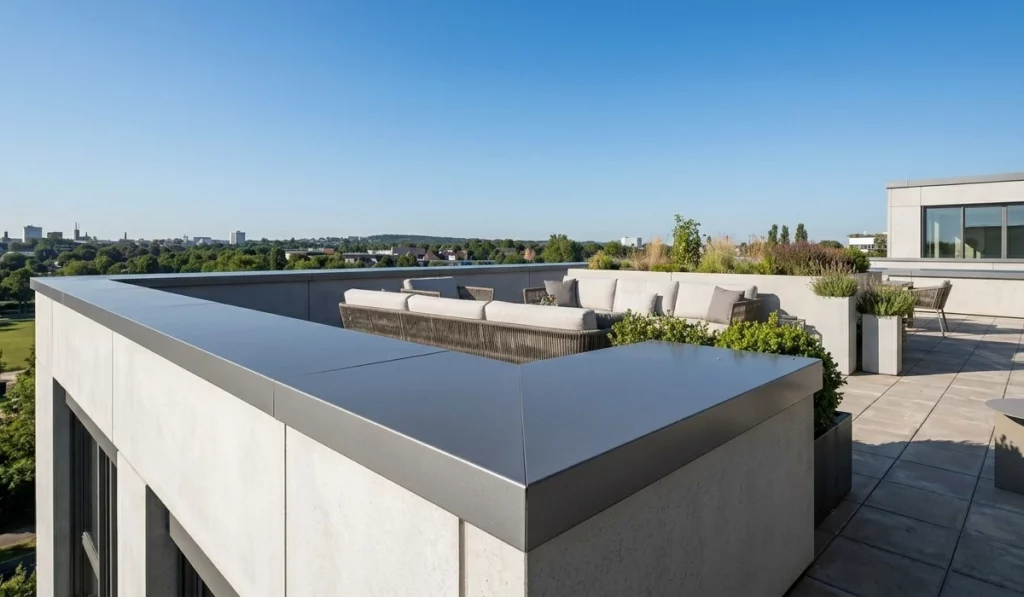
Terrace parapet wall height is one of the most frequently discussed aspects of roof terrace design. Unlike non-accessible roofs, terraces are intended for regular occupancy and therefore require greater attention to safety.
In many projects, parapet heights between 1100 mm and 1200 mm are commonly used to support occupant protection while maintaining comfortable views and architectural aesthetics.
The final dimension should always be coordinated with applicable regulations, occupancy requirements, and overall terrace design.
OSHA Parapet Wall Height Requirements
For projects that reference U.S. safety standards, OSHA guidance is frequently discussed.
OSHA generally recognizes a parapet wall of approximately 42 inches (1070 mm) as an acceptable form of fall protection under certain conditions. Lower parapets may require guardrails, warning systems, or additional protective measures.
However, project teams should always verify local regulatory requirements because safety standards vary significantly between countries and jurisdictions.
For projects in Germany, Austria, and Switzerland, local building regulations and European standards generally take precedence over OSHA guidance. Nevertheless, OSHA’s 42-inch benchmark remains one of the most widely referenced fall-protection dimensions in international construction discussions.
Building Code Considerations for Parapet Wall Height
Parapet wall height is influenced by much more than waterproofing and safety alone.
Building regulations may address:
- Fall protection
- Roof access
- Fire separation
- Maintenance safety
- Occupant protection
- Roof terrace design
- Screening of rooftop equipment
International frameworks such as the International Building Code (IBC), together with national and local regulations, often influence parapet design decisions.
While specific requirements vary by jurisdiction, one principle remains consistent: the parapet wall must be designed according to its intended function and building use.
A professional review of applicable regulations should always form part of the design process.
Typical Roof Parapet Wall Heights by Building Type
| Building Type | Typical Roof Parapet Height |
| Single-family home | 900–1200 mm |
| Apartment building | 1000–1200 mm |
| Commercial building | 1000–1200 mm |
| Roof terrace | 1100–1200 mm |
| Equipment screening wall | 1200–1800 mm |
| Privacy wall | 1500 mm+ |
The correct roof parapet wall height depends on roof access, building use, safety requirements, and architectural objectives.
Roof Parapet Wall Design Considerations
Designing the correct roof parapet wall involves far more than selecting a height from a table. The parapet must function as part of the overall building envelope and work together with waterproofing systems, drainage, insulation, rooftop equipment, and maintenance access requirements.
Architects often use parapets to create clean building lines and conceal rooftop installations. However, every increase in parapet height affects structural loading, wind exposure, material consumption, and construction costs.
The most successful projects balance aesthetics, safety, waterproofing performance, and constructability. A parapet should not be viewed as a standalone wall but as an integrated roof-edge system.
How Is Parapet Wall Height Measured?
One reason parapet height can be confusing is that different people measure from different reference points.
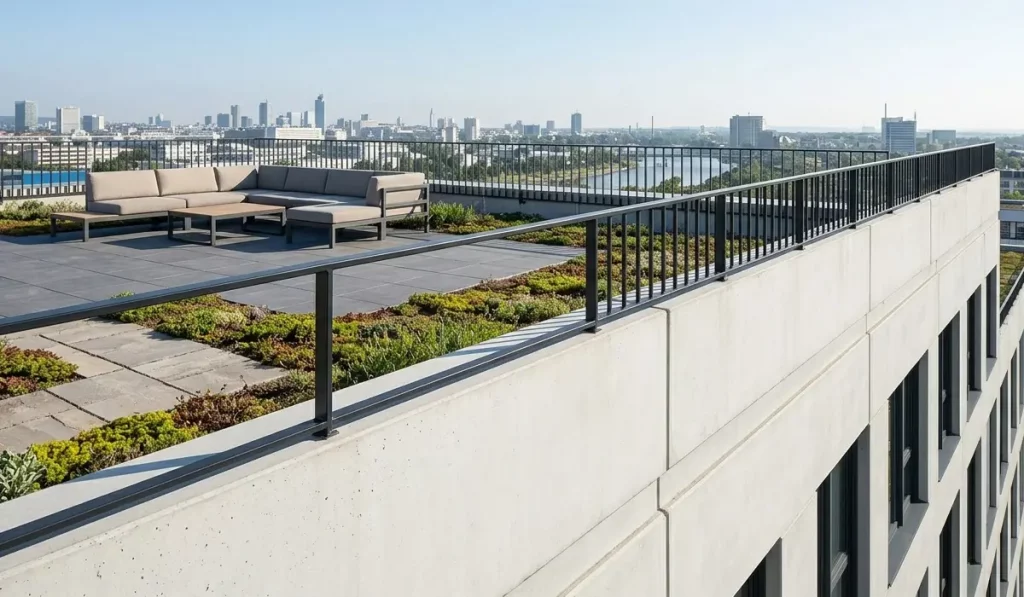
In professional construction practice, parapet height is generally measured from the finished roof surface to the top of the parapet or coping system.
The measurement should account for:
- Structural roof slab
- Insulation layers
- Waterproofing membrane
- Roof finish
- Coping or parapet cap
Because modern roofs often contain thick insulation packages, measuring from the structural slab instead of the finished roof surface can create significant differences in reported height.
Consistency in measurement is essential when reviewing drawings, specifications, and regulatory requirements.
Recommended Measurement Diagram for Architects and Contractors
To improve understanding and reduce construction errors, every parapet detail should include a dedicated drawing showing:
| Component | Purpose |
| Structural slab | Load-bearing roof structure |
| Insulation | Thermal performance |
| Waterproofing membrane | Water protection |
| Finished roof surface | Reference level |
| Parapet wall | Edge protection |
| Coping cap | Weather protection |
| Measured parapet height | Safety verification |
A detailed section drawing helps coordinate waterproofing, structural engineering, roofing, and facade interfaces before construction begins.
For architects, this simple step often prevents expensive roof-edge redesigns later in the project.
Common Design Mistakes When Determining Parapet Height
Many parapet-related problems do not result from poor construction. They originate during design.
One common mistake is selecting parapet height based solely on appearance without considering waterproofing requirements. Another frequent issue is failing to account for future roof insulation upgrades, resulting in insufficient upstand heights after construction.
Designers also occasionally overlook maintenance access requirements. A roof that appears inaccessible during design may require regular servicing after mechanical equipment or solar panels are installed.
The most effective solution is to evaluate waterproofing, safety, maintenance, and architecture together rather than separately.
Low, Medium and High Parapet Walls – Advantages and Disadvantages
Parapet height should always reflect project objectives.
Low Parapet Walls (300–600 mm)
Low parapets are commonly used where the primary objective is waterproofing protection or architectural screening.
Advantages
- Lower material costs
- Reduced structural loads
- Clean architectural appearance
- Faster construction
Disadvantages
- Limited fall-protection capability
- Less rooftop equipment concealment
- Reduced privacy
- May require additional guardrails
Medium Parapet Walls (900–1200 mm)
Medium-height parapets are among the most common solutions in modern construction.
Advantages
- Improved safety
- Better rooftop screening
- Suitable for many accessible roof applications
- Strong balance between function and aesthetics
Disadvantages
- Increased material usage
- Greater wind loading
- Higher structural requirements
High Parapet Walls (1500 mm+)
Tall parapets are often used where privacy, wind protection, or equipment screening are priorities.
Advantages
- Increased privacy
- Better wind protection
- Enhanced visual screening
- Strong architectural presence
Disadvantages
- Higher construction costs
- Greater structural loading
- More complex detailing
- Increased material consumption
This comparison helps project teams select a parapet height that aligns with building performance goals rather than aesthetics alone.
Real Construction Example 1 – Residential Flat Roof
Consider a modern residential flat roof designed with future photovoltaic installation in mind.
Typical design parameters may include:
- Roof insulation build-up: approximately 180 mm
- Waterproofing upstand: 150 mm+
- Finished parapet height: approximately 1100 mm
- Aluminum coping system
- Concealed roof drainage
In this scenario, the parapet serves multiple purposes simultaneously. It supports waterproofing, provides edge protection, conceals equipment, and contributes to the architectural appearance of the home.
Projects like this demonstrate why parapet height should never be selected based on a single criterion.
Real Construction Example 2 – Accessible Roof Terrace
Accessible terraces place significantly greater demands on parapet design.
A typical roof terrace may include:
- Finished walking surface
- Drainage layer
- Waterproofing membrane
- Guarding requirements
- Privacy considerations
- Rooftop furniture and occupancy loads
Parapet heights in the range of 1100–1200 mm are common in such situations because they help support safety requirements while maintaining architectural quality.
The terrace example illustrates how parapet design directly influences both user safety and long-term usability.
Real Construction Example 3 – Commercial Building Roof
Commercial roofs frequently contain mechanical equipment, solar arrays, maintenance walkways, and service access routes.
In these cases, parapets often perform multiple functions:
- Roof-edge safety
- Equipment screening
- Waterproofing support
- Architectural integration
- Wind protection
As buildings become larger and more complex, roof-edge coordination becomes increasingly important. Well-designed parapets can significantly reduce maintenance risks and improve the appearance of rooftop equipment installations.
Traditional Concrete Parapets vs Modern Prefabricated Parapet Systems
Historically, many parapets were constructed using cast-in-place concrete or masonry.
While these methods remain common, they often introduce additional construction time, labor requirements, and variability in quality.
Modern prefabricated parapet systems offer an alternative approach.
| Factor | Traditional Concrete Parapet | Prefabricated Parapet System |
| Installation Speed | Slower | Faster |
| Site Labor | Higher | Lower |
| Construction Variability | Higher | Lower |
| Weather Dependency | Significant | Reduced |
| Quality Consistency | Variable | Repeatable |
| Project Coordination | More Complex | Simplified |
As labor shortages continue to affect the construction industry, prefabricated systems are becoming increasingly attractive for developers and contractors.

Why Roof Edge Design Is Becoming More Important
Modern buildings place greater demands on roof edges than ever before.
Higher insulation levels, renewable energy systems, green roofs, rooftop amenities, and stricter sustainability goals all increase the importance of parapet design.
The parapet is no longer merely a wall at the edge of a roof. It has become a critical component of the building envelope that influences energy performance, safety, maintenance, and construction efficiency.
Projects that invest in roof-edge design early often experience fewer construction problems and lower lifecycle costs.
Related Solution – Prefabricated Parapet Systems by Overtec
Modern parapet design requires more than compliance with minimum height requirements. It requires a roof-edge solution that supports safety, waterproofing, sustainability, and efficient construction.
Overtec develops prefabricated parapet systems that help architects, developers, and contractors create precise roof-edge details with significantly reduced on-site complexity.
Compared with traditional cast-in-place concrete parapets, Overtec’s systems provide:
- Up to 67% lower CO₂ emissions
- Faster installation
- Reduced thermal bridging
- Improved quality consistency
- Less weather dependency during construction
- Greater planning certainty
- Reduced site labor requirements
- Lower coordination effort between trades
- Reduced risk of roof-edge detailing errors
As labor shortages continue to impact construction projects across Europe, reducing complex on-site work has become a major advantage. Prefabricated systems help improve efficiency while maintaining a high level of quality control.
For projects where parapet height, waterproofing performance, and construction speed are equally important, prefabricated roof-edge solutions can provide significant long-term value.
Planning a new flat roof or roof terrace project? Contact Overtec to learn how prefabricated parapet systems can improve safety, reduce construction time, and create more reliable roof-edge details.
Related Topics
Parapet Wall Construction
Understanding construction methods helps ensure the chosen parapet height can be built efficiently and maintained over time.
Roof Parapet Wall Design
Height is only one part of successful parapet design. Waterproofing, drainage, and maintenance access are equally important.
Parapet Wall Cap Flashing
Coping systems and flashing details play a major role in protecting parapets from weather-related deterioration.
Flat Roof Parapet
Flat roofs require careful coordination between parapet height, waterproofing upstands, drainage, and safety requirements.
Conclusion
The height of a parapet wall influences much more than appearance. It affects safety, waterproofing performance, maintenance requirements, construction efficiency, and long-term building durability.
There is no universal parapet height suitable for every project. Decorative parapets, residential roofs, roof terraces, and commercial buildings all have different requirements. The correct height depends on how the roof will be used, the applicable regulations, and the overall design strategy.
Successful projects consider parapet height as part of a complete roof-edge system rather than a single dimension on a drawing. By integrating safety, waterproofing, drainage, and constructability from the beginning, project teams can create roof edges that perform reliably for decades.
Frequently Asked Questions (FAQ)
There is no single universal minimum height. Requirements depend on waterproofing, safety regulations, building use, and local building codes.
Many modern parapets fall between 900 mm and 1200 mm, although project-specific requirements may differ.
A common range is approximately 3 to 4 feet, depending on building type and intended function.
OSHA commonly references a parapet height of approximately 42 inches (1070 mm) as an equivalent form of fall protection under certain conditions. Additional requirements may apply.
Parapet height is typically measured from the finished roof surface to the top of the parapet or coping system.
In some situations, a sufficiently high parapet may provide fall protection. However, requirements vary by jurisdiction and project conditions.
Roof terraces often use parapet heights in the range of approximately 1100–1200 mm, depending on local regulations and safety requirements.
The parapet must accommodate waterproofing upstands, insulation, drainage details, and coping systems. Height that is insufficient for these components can create leakage risks.
Decorative parapets are often lower and primarily serve architectural purposes, while safety parapets are designed to contribute to fall protection and roof-edge safety.
Yes. Prefabricated parapet systems are increasingly used in residential, commercial, industrial, and institutional projects because they offer improved installation speed and quality consistency.